
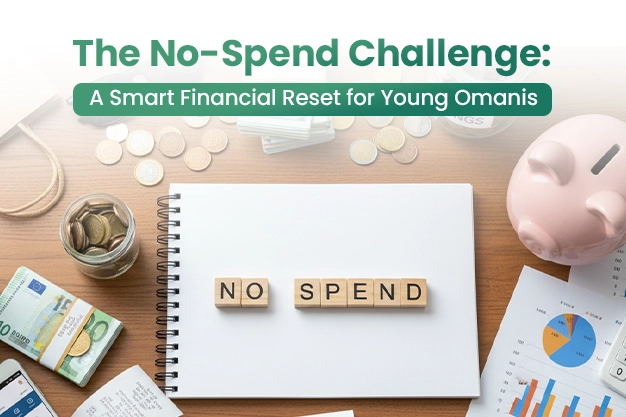
One-click shopping. Food delivery at midnight. Flash sales that appear just as your resolve weakens. In today’s digital world, spending has never been easier — or more invisible. Small daily expenses accumulate quietly, and before the month ends, most people are left wondering where their money went.
That’s exactly why the No-Spend Challenge has gone viral across TikTok and social media worldwide — not as a financial punishment, but as a powerful reset. For residents across Oman and the wider Middle East, where lifestyle convenience is high and digital spending is effortless, this challenge couldn’t be more timely.
What Is the No-Spend Challenge?
The concept is refreshingly simple: commit to avoiding all non-essential purchases for a fixed period — typically one week, two weeks, or a full month.
You continue covering your genuine needs without interruption. Essential expenses — rent, utilities, groceries, fuel, school fees, medicines — are never paused. What you temporarily stop is everything else: dining out, café visits, online shopping carts, fashion upgrades, gadgets, and the kind of impulse purchases that feel necessary in the moment and forgotten a week later.
This isn’t about deprivation. It’s about clarity.
Why It Works — Four Real Benefits
1. It exposes hidden spending patterns
Most people significantly underestimate what they spend on “small” things — delivery fees, specialty coffees, marketplace impulse buys, frequent mall visits. A no-spend period makes these invisible outflows visible. You begin noticing your triggers: boredom spending, stress spending, social spending. Awareness is the first step to change.
2. It resets your money mindset
When you remove automatic purchasing from your routine, even briefly, something shifts. You start asking better questions — Do I actually need this? Do I already own something that works? Can this wait? That habit of questioning rarely disappears when the challenge ends. It becomes part of how you think about money.
3. It builds savings fast
In Oman and GCC cities where dining out, delivery services, and convenience spending are woven into daily life, even a single month of paused discretionary spending can free up a meaningful sum. That money can be redirected immediately toward an emergency fund, investment plan, debt reduction, or a family goal you’ve been putting off.
4. It rekindles simple pleasures
Without paid entertainment as the default, people rediscover genuinely enjoyable low-cost alternatives — home-cooked meals, family gatherings, beach evenings, wadis, and community events. This is particularly meaningful in Omani and Gulf culture, where connection and togetherness are among the richest experiences life offers.
How to Do It — Without Making Life Miserable
A No-Spend Challenge only works when it’s structured, realistic, and personally tailored. Here’s how to approach it properly:
1. Choose a realistic timeframe
Start with 7 days if you’re new to this. Fourteen days offers a moderate challenge. A full 30-day reset delivers the deepest results. Critically — avoid starting during Eid, weddings, family celebrations, or major social occasions. In Middle Eastern culture, hospitality and generosity are core values worth protecting, not sacrificing.
2. Write your rules before you begin
Define clearly what’s allowed and what’s paused. Ambiguity creates loopholes. Groceries, fuel, bills, medicines — allowed. Takeout, online shopping, café runs, new clothing — paused. Put it in writing.
3. Try a Category Challenge if a full reset feels overwhelming
Instead of stopping all discretionary spending, choose one category: no takeout for 30 days, no online shopping, no café visits except once a week. This targeted approach works well for busy professionals and families juggling multiple responsibilities.
4. Replace, don’t just remove
Cook traditional Omani dishes at home instead of ordering delivery. Organize a potluck with friends instead of a restaurant dinner. Use parks, beaches, and public spaces for recreation. Borrow items from family instead of buying. Substitution keeps life enjoyable while the savings quietly stack up.
5. Track every riyal you didn’t spend
Keep a simple daily log of what you chose not to buy. Watching that number grow is genuinely motivating — and it reinforces exactly why you started.
One Important Reminder
The No-Spend Challenge is a short-term discipline exercise, not a permanent lifestyle. Financial wellness in the Middle East rightfully includes generosity, hospitality, and meaningful social connection. The goal is not to remove joy from your life — it’s to return to your normal spending with sharper judgment and clearer priorities.
Think of it as a financial detox. A pause. A chance to look clearly at your habits and decide, deliberately, which ones you want to keep. Even one week done consistently can shift how you relate to money for months afterwards.
At Smart Money Education, Hanaa Al Hinai helps young Omanis build exactly this kind of financial self-awareness — one smart habit at a time.
Ready to take on the challenge? Visit www.smartmoneyeducation.com and start your financial reset today.
Smart Money Education is an initiative by Hanaa Al Hinai, a renowned Money Coach and Financial Planning Specialist dedicated to helping young Omanis manage their money smartly and efficiently.