
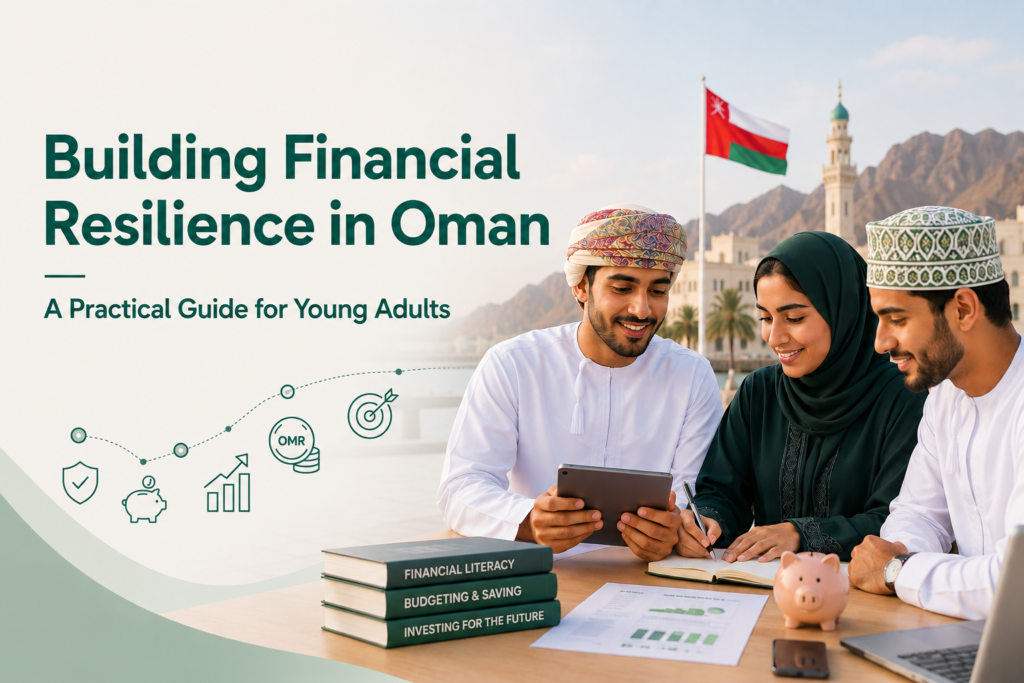
Financial resilience — the ability to absorb income shocks, manage debt wisely, and adapt to a changing economy — is no longer a nice-to-have. For young Omanis entering the workforce or early in their careers, it is one of the most important life skills they can develop. Here is a clear, actionable guide to help you start building it today.
Why This Matters Now in Oman
Two forces are making financial stability harder to take for granted for young people in the Sultanate.
The First: Economic Change
As Oman continues its economic diversification under Vision 2040, moving away from oil dependency and growing the private sector, the nature of employment is shifting. Career paths that felt secure a decade ago look different today, and young Omanis entering the job market must be prepared for a more dynamic environment.
The Second: The Rising Cost of Living
Whether you are managing rent in Muscat, supporting family commitments, or simply trying to save for the future, costs are real and growing. Without deliberate money habits, income disappears faster than it should.
Young Omanis who build genuine financial buffers and strong money habits now will carry a lasting advantage over those who wait.
Four Habits That Create Immediate Results
You do not need to be wealthy or have a financial advisor to take control. Four simple habits can transform your financial position:
1. Track Your Cash Flow
Use any budgeting app or a simple spreadsheet. Know exactly what comes in and what goes out every month. You cannot improve what you cannot see — and most people are genuinely surprised by where their money actually goes.
2. Build a Three-Month Emergency Fund
This is your single most important financial goal. Three months of living expenses, kept in a liquid and accessible account, protects you from job loss, medical bills, or unexpected costs — without needing to borrow. In Oman, where family financial obligations can be significant, this buffer matters even more.
3. Automate Your Savings
Set up an automatic transfer on payday — even 10% to begin with — so saving happens before you spend. Willpower fluctuates; automation does not. Many Omani banks offer standing order features that make this straightforward to set up.
4. Review Your Subscriptions
Cancel one this month. The habit of regularly reviewing your spending matters far more than the specific amount saved.
Protecting Your Income
Resilience is not only about saving — it is about reducing your exposure to shocks.
Basic protection goes a long way. Health coverage, for example, is a low-cost shield against costs that can otherwise wipe out months of savings in a single event. Understanding what insurance products are available to you in Oman — and which actually fit your needs — is a worthwhile investment of time.
On the income side, depending on a single employer is a single point of failure. Consider developing an additional stream of income — freelance work, tutoring, consulting in your professional area, or a skill-based side project. Even modest supplemental income that covers one month’s expenses meaningfully changes both your financial position and your confidence.
Investing: Keep It Simple and Start Early
Investing does not need to be complex to be effective. A resilient approach for a young adult starts with a diversified foundation — broad, low-cost instruments that provide growth potential with managed risk. Once that base is in place, you can consider allocating a smaller portion to sectors with long-term growth potential.
One rule that cannot be overstated: keep your emergency fund completely separate from your investments. These serve entirely different purposes. One protects you; the other grows your wealth over time.
Your Three Starting Points
If you take nothing else from this post, start here:
- Build a three-month emergency fund before anything else.
- Automate 10–20% of your income into savings from your next payday.
- Start one side-income project with a realistic six-month target.
Get Guided by an Expert Who Understands Oman
Smart Money Education, founded by Financial Planning Specialist Hanaa Al-Hinai, offers practical, Oman-focused financial guidance through one-to-one consultations, group sessions, online tutorials, and corporate training programmes. Hanaa brings over 20 years of experience in wealth management and banking — including senior roles within the Sultanate — and has worked with organisations including PDO, OQ, Ooredoo, and the Ministry of Minerals and Energy.
Whether you are just starting out or looking to get serious about your financial future, the support is here.
Visit smartmoneyeducation.com or contact info@smartmoneyeducation.com to take your first step.
Final Thought
Financial resilience is not built overnight — but it is built. The best time to start is now.