
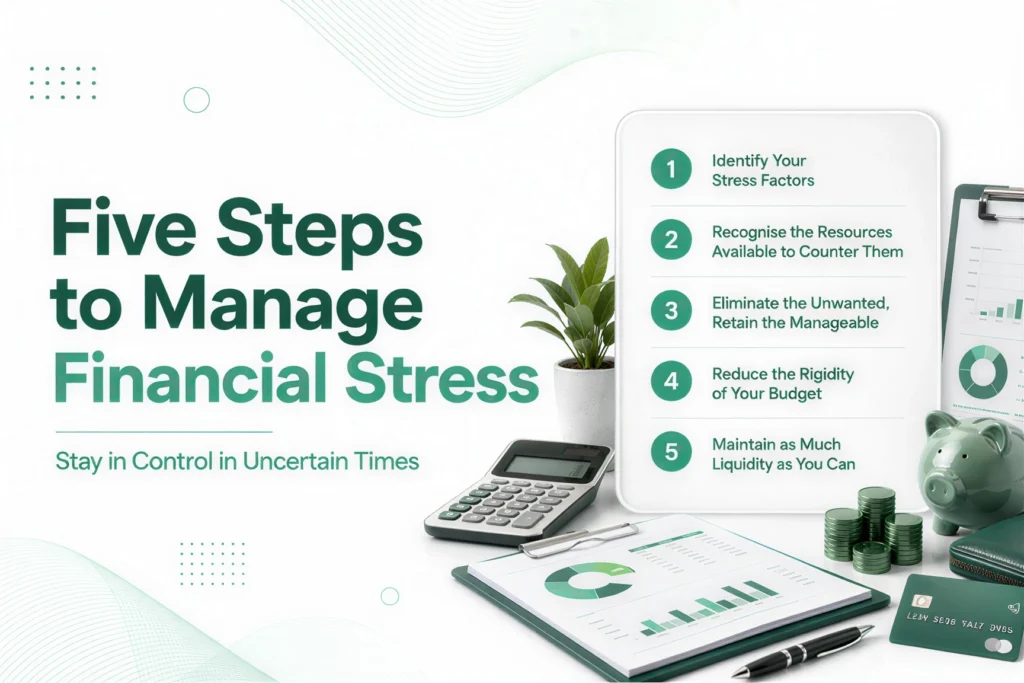
Life in 2026 moves fast — and so do our expenses. Rising living costs, fluctuating markets, job transitions, and the endless temptations of one-click spending have made financial stress one of the most common pressures of modern life. The good news? Stress, like money, can be managed. With a clear plan and a calm mind, you can take charge of your finances no matter what the economy throws at you.
Here are five practical steps to help you regain control — of your money and your peace of mind.
Step 1: Identify Your Stress Factors
You cannot fight an enemy you cannot see. The first step toward financial calm is naming exactly what is troubling you.
Sit down and make an honest list of your short-term and long-term financial goals and commitments — rent or mortgage payments, loan instalments, school fees, savings targets, and retirement plans. Then ask yourself: which of these are causing stress today, and which could cause stress in the months ahead?
Remember, stress is not always purely financial. Modern habits such as excessive gaming, endless scrolling, impulsive online shopping, and dependence on nicotine or alcohol quietly drain both your wallet and your wellbeing. Identifying these hidden stress factors is just as important as identifying the financial ones.
Step 2: Recognise the Resources Available to Counter Them
Once your list is complete, shift your focus from problems to solutions. Examine every resource at your disposal — your savings, family support, employer benefits, insurance cover, and professional financial guidance.
Decide which stress factors must be eliminated for your greater good, and which are actually worth keeping. This may sound surprising, but not all financial pressure is bad. Some of it — like the discipline of a monthly savings commitment or an investment plan — is simply the price of achieving positive long-term outcomes. Learn to tell the difference between destructive stress and productive pressure.
Step 3: Eliminate the Unwanted, Retain the Manageable
Now comes the pruning. Carefully remove the stress factors that serve no purpose: forgotten subscriptions, impulsive purchases, buy-now-pay-later traps, and commitments that no longer fit your life.
At the same time, protect the commitments that safeguard your future. Your insurance premiums and medical cover are not burdens — they are shields. Even if you feel tempted to break a fixed deposit or stop paying your insurance premiums to ease short-term pressure, treat that as the very last resort. The protection you give up today may be exactly what you need tomorrow.
Step 4: Reduce the Rigidity of Your Budget
A budget is your best friend in uncertain times — but only if it bends without breaking. A personal budget significantly reduces the likelihood of falling into debt, and long-term budgeting allows you to plan your income, resources, and expenses well in advance.
However, a budget that is too strict becomes a source of stress in itself. Prices change, plans change, and life rarely follows a spreadsheet. So build flexibility into your plan — allow room for adjustments, small comforts, and unexpected expenses. A budget should guide you, not imprison you. Keep it realistic, keep it flexible, and keep it upbeat.
Step 5: Maintain as Much Liquidity as You Can
When uncertainty strikes — a job change, a medical bill, a sudden repair — cash is king. It is always wiser to have readily available money than to have all your wealth locked away.
You may come across tempting investment opportunities, from trending stocks to digital assets promising quick returns. By all means invest wisely, but resist putting every rial to work. Keep enough cash on hand to carry you through several difficult months.
Equally important: make sure your emergency fund is easily accessible to your immediate family. In a true emergency, the difference between an accessible fund and an inaccessible one can be the difference between having a safety net and having none at all.
A Final Word
Financial stress feeds on confusion and inaction. The moment you identify it, organise your resources, protect what matters, stay flexible, and keep liquidity within reach, you take back control. Uncertain times do not have to define your financial future — your response to them will.
For personalised guidance on building financial resilience, connect with Financial Planning Specialist Hanaa Al Hinai at SmartMoney Education, Oman.
Visit www.smartmoneyeducation.com — because smart money begins with smart minds.